Telepathy in nonspeaking autism: opening portals to nonlocal consciousness
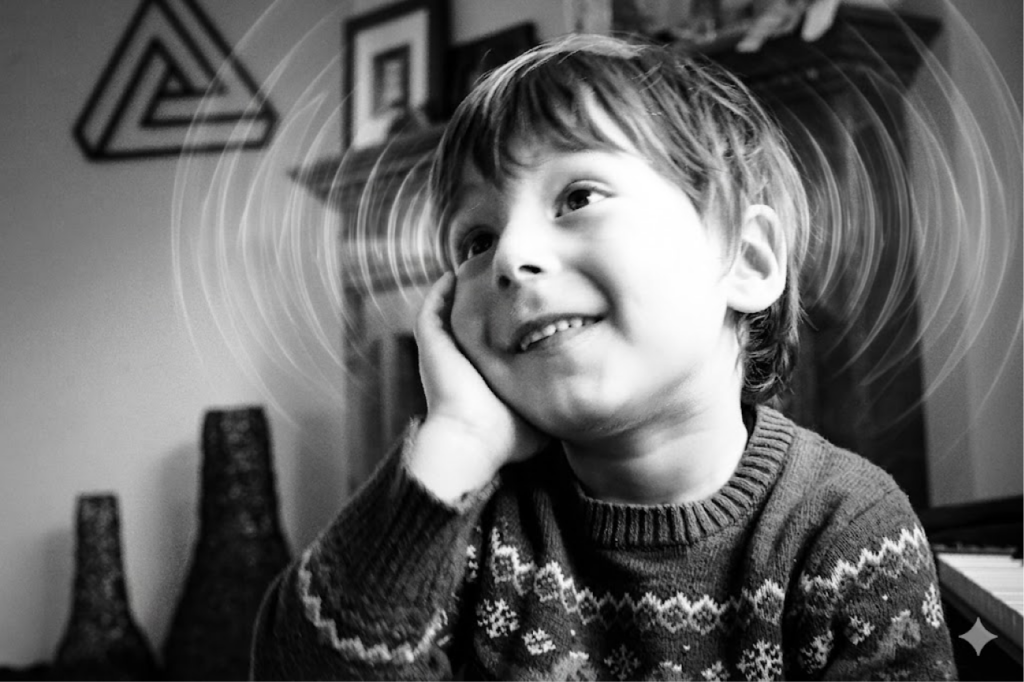
For decades, our understanding of autism was limited by a narrow definition of intelligence—one strictly tied to the ability to speak. But what if the absence of verbal communication isn’t a “deficit,” but rather a gateway to other extraordinary forms of connection?
In our latest research, my colleagues and I are exploring a phenomenon that challenges the very foundations of materialist science: telepathic abilities in children with nonspeaking autism.
A New Scientific Collaboration
This journey began when I was interviewed by Ky Dickens for the Telepathy Tapes podcast (Season 1 | Episode 6). I was fascinated by the work of Dr. Diane Hennacy, a psychiatrist who has documented children telepathically receiving information from their mothers or therapists.
Today, alongside Dr. Hennacy and Dr. Marina Weiler (University of Virginia), we have formed a collaborative research group to analyze this data rigorously. We are currently preparing to submit our first paper for publication, featuring three extraordinary case studies.
Breaking the Stigma of “Mental Deficit”
Historically, nonspeaking autism was often conflated with intellectual disability. Because speech is the “gold standard” for measuring intelligence in our educational systems, these children were frequently overlooked.
Our research suggests a different perspective: a challenge in motor abilities or verbal communication does not mean a lack of awareness. In fact, it might be exactly what allows other capacities to flourish.
The Resistance to Nonlocal Consciousness
As a neuroscientist, I am well aware of the resistance this topic faces. Many in the scientific community dismiss telepathy as “impossible” under the materialist framework. However:
- Evidence exists: Telepathic communication has been documented in controlled parapsychological studies for years.
- The path of discovery: While critics label initial findings as “anecdotal,” this is exactly how every new field of science begins—with careful observation that leads to rigorous inquiry.
Our team is now moving beyond preliminary evidence to conduct controlled laboratory studies on telepathy with therapists in Chicago.
Why This Research Matters
I believe that telepathy in nonspeaking children provides profound insights into the nature of nonlocal consciousness.
Just as a blind individual may develop extraordinary auditory or kinesthetic sensitivity, the loss of “normal” communication channels may open a portal to others. This research isn’t just about telepathy; it’s about understanding the full range of human communication and the resilience of the human spirit.
Looking Ahead
I look forward to sharing more updates with you as our findings are published. In the meantime, I invite you to remain curious about the hidden depths of the human mind.

Thank you. Looking forward to reading more about your research.🙏
Thank you Tim!
Looking forward to following your work. Listened today on Breakdown and was happy to learn of Bernardo Kastrup work.